Safety in the Market
  • Home
  • Why Choose Us
    • Why Choose Us
    • About Us
  • Why Learn To Trade
    • Why Learn to Trade?
    • How To Get Started
  • Active Trader Program
    • Active Trader Program
    • See What’s Possible
    • Further Studies
    • Frequently Asked Questions
    • Support
    • Ready to Order
  • Testimonials
  • Free Resources
  • Contact
  • Member Login
Select Page

Consistency

by SITM | Oct 12, 2022 | Andrew Baraniak, General Newsletter, No_index

Consistency

If you’ve been reading the Trading Tutors monthly contributions for a while now, you may have noticed something – consistency. Consistency of theme, consistency of format, consistency of outcome. And this is most certainly deliberate, for one purpose – to encourage consistency in the trading routine of the trader who is reading it. Will we capture a fantastic trading setup every day? No. But, to get the big ones, we need to be there before they arrive – and this requires a consistent routine, a consistent approach. Now that being said, there is one additional thing to note with this month’s case study: it had you in the market well before a critical news headline raced around the world.

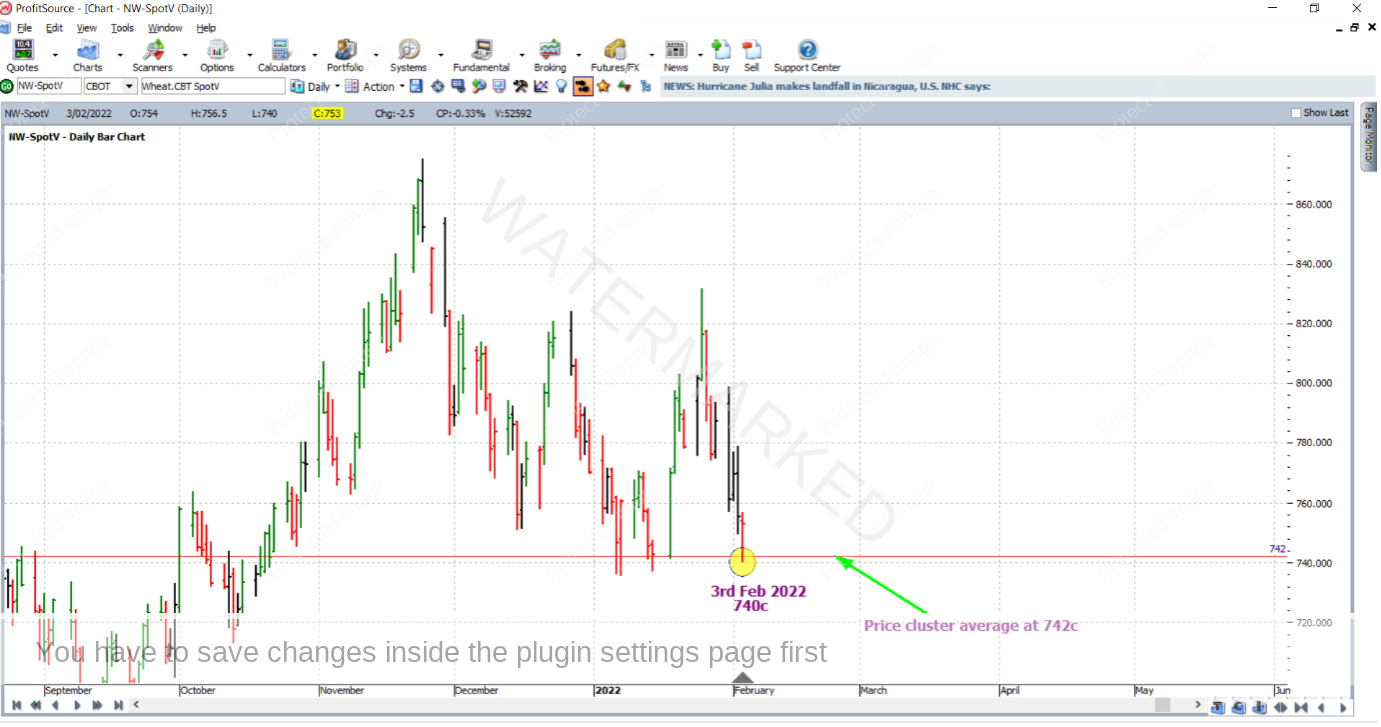
So now to the Wheat futures market where a trade setup had presented itself to Safety in the Market traders in early February of this year. In the said market, three solid price analysis reasons had clustered at an average of 742 cents per bushel and the market was moving down towards this level. Have a go at reproducing the price cluster. It’s a very close match to one of the main types of set ups taught in our Active Trader Program coaching. 3 February 2022 came, and the market reached this level and a reversal back to the upside was anticipated. The market lowed at 740 cents, only breaking the cluster’s average by 2 cents, a relatively small error in relation to the size of an average daily bar in this market. See the ProfitSource chart below in Walk Thru mode, symbol NW-SpotV.
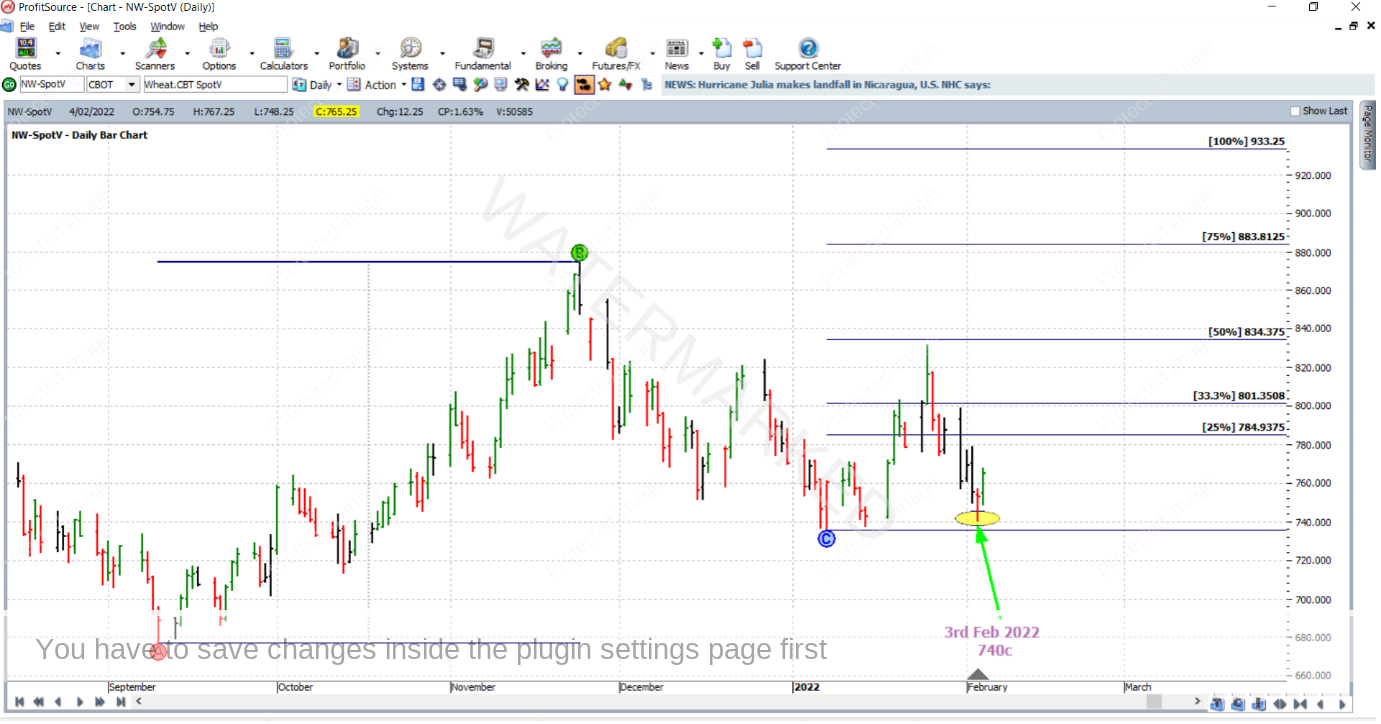
The earliest opportunity to enter using the end of day chart (the daily bar chart) came the following day, with the up day of 4 February 2022 turning the daily swing chart up. This would have had you long wheat at 756.75c with an initial exit stop loss at 739.75.

As for trade management, the A to B reference range chosen was the monthly upswing from the 10 September 2021 low to the 24 November 2021 high, with Point C being placed on the low of 7 January 2022. Stops will be managed currency style. See below.
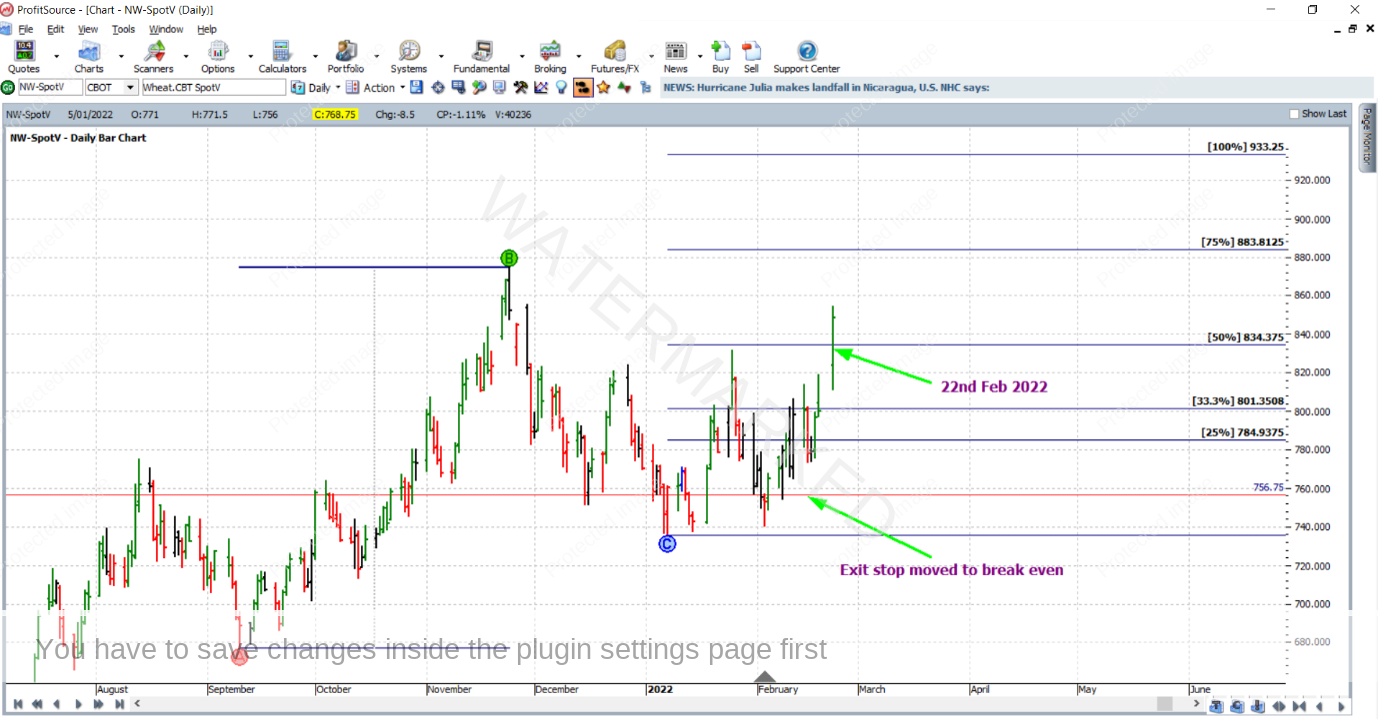
On 22 February 2022, stops were moved to break even when the market reached the 50% milestone.
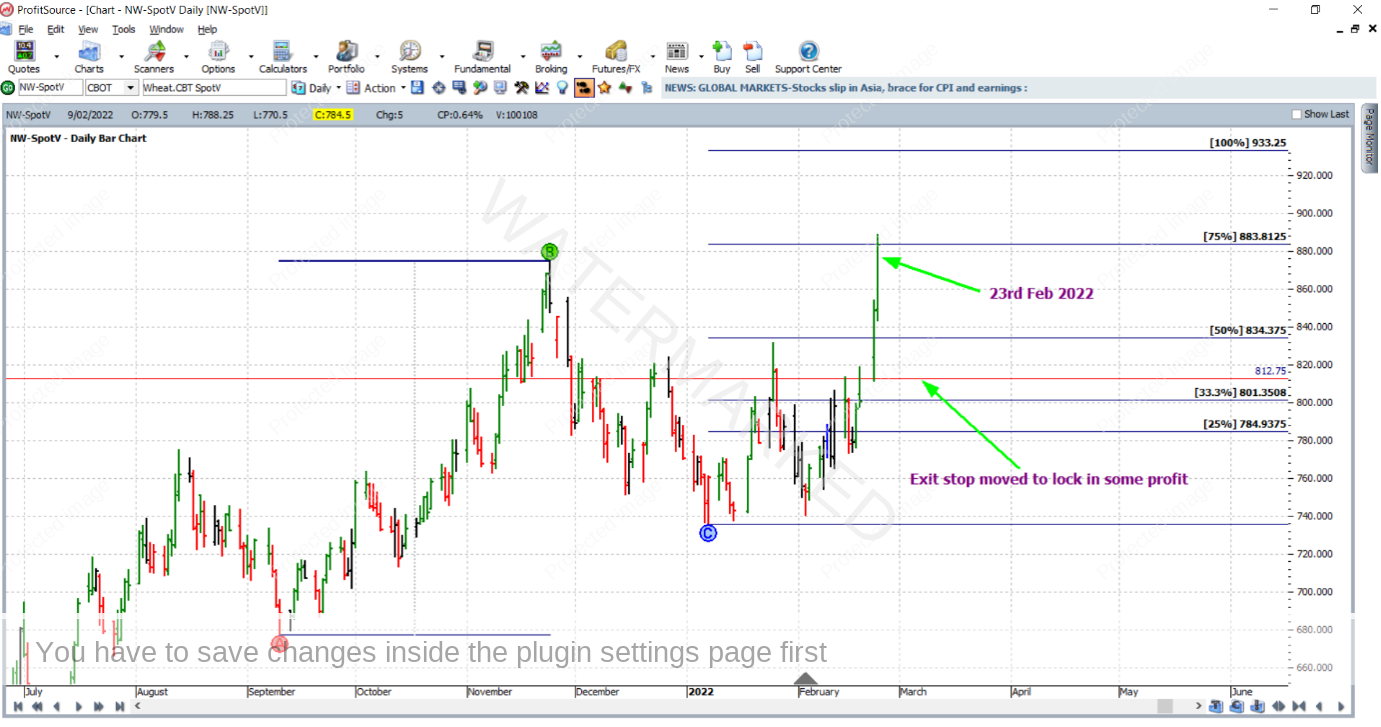
On 23 February 2022, only a day later, the market reached the 75% milestone. Exit stops were moved to one third of the average monthly bar range (approximately 21.50c based on the 60 monthly trading bars up to and including that of January 2022) below the 50% milestone in order to lock in some profit.
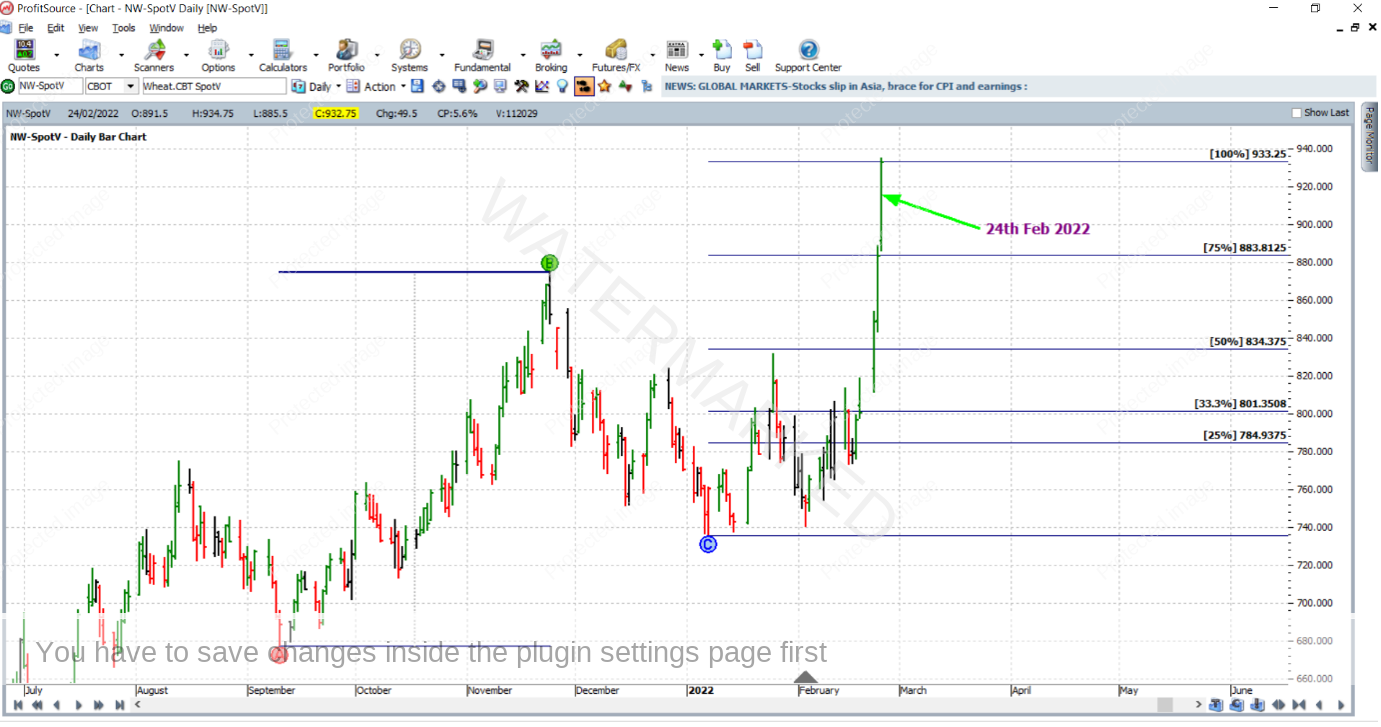
And, but a day later, on 24 February 2022 the 100% milestone was reached. Interesting to note is that this important milestone was reached on the same date that the Russia-Ukraine conflict began. This strongly trending market definitely knew something was going on in the world. Again, worthy of note to the trader is that the technical analysis and entry signal to the trade came about well before that world event officially began. In other words this market spoke to us well in advance!

Now for the analysis of the rewards.

In terms of the Reward to Risk Ratio:

Initial Risk: 756.75 – 739.75 = 17.00 = 68 points (point size is 0.25)

Reward: 933.25 – 756.75 = 176.50 = 706 points

Reward to Risk Ratio: 706/68 = approximately 10 to 1

According to the contract specifications for Wheat futures on the CME Group website, each point of price movement changes the value of one contract by $12.50USD. So in absolute USD terms the risk and reward for each contract of the trade was determined as:

Risk =               $12.50 x 68 = $850

Reward =          $12.50 x 706 = $8,825

In AUD terms at the time of taking profit that reward was approximately $12,257

Risking 5% of the account size for this trade, the resulting percentage change to the account size after taking profits would be:

10 x 5% = 50%

Many brokers will offer access to this strongly trending market via a CFD, where much smaller position sizes are available.

Work Hard, work smart.

Andrew Baraniak

Search

Resent Posts

  • Feeling Abundant February 27, 2026
  • What’s in a Number? February 27, 2026
  • Most Traders Focus on Being Right – Professional Traders Focus on This Instead February 18, 2026
  • Home
  • Terms and Conditions
  • Privacy Policy
  • Financial Services Guide
  • Legals

Copyright © 2025 T&D Global Pty Ltd as trustee for T&D Business Trust 1 | www.safetyinthemarket.com.au | Web Solution by Dsynit