
Stop and Reverse: When the Market Tells You You’re Wrong
One of the hardest lessons in trading is accepting that being wrong is not the problem. Staying wrong is. This is where the concept of Stop and Reverse (SAR) becomes a powerful tool. Rather than simply exiting a losing position when the market invalidates your trade thesis, a stop and reverse strategy recognises that the very reason you are exiting may be the reason to establish a position in the opposite direction.
Chart 1 shows a recent set up on Crude Oil, I was looking for a short entry around the end of the month and if a signal was delivered, I also had a belief that if the market did enough to get me in and then ran hard the other way I was prepared to close out the short position and go long.
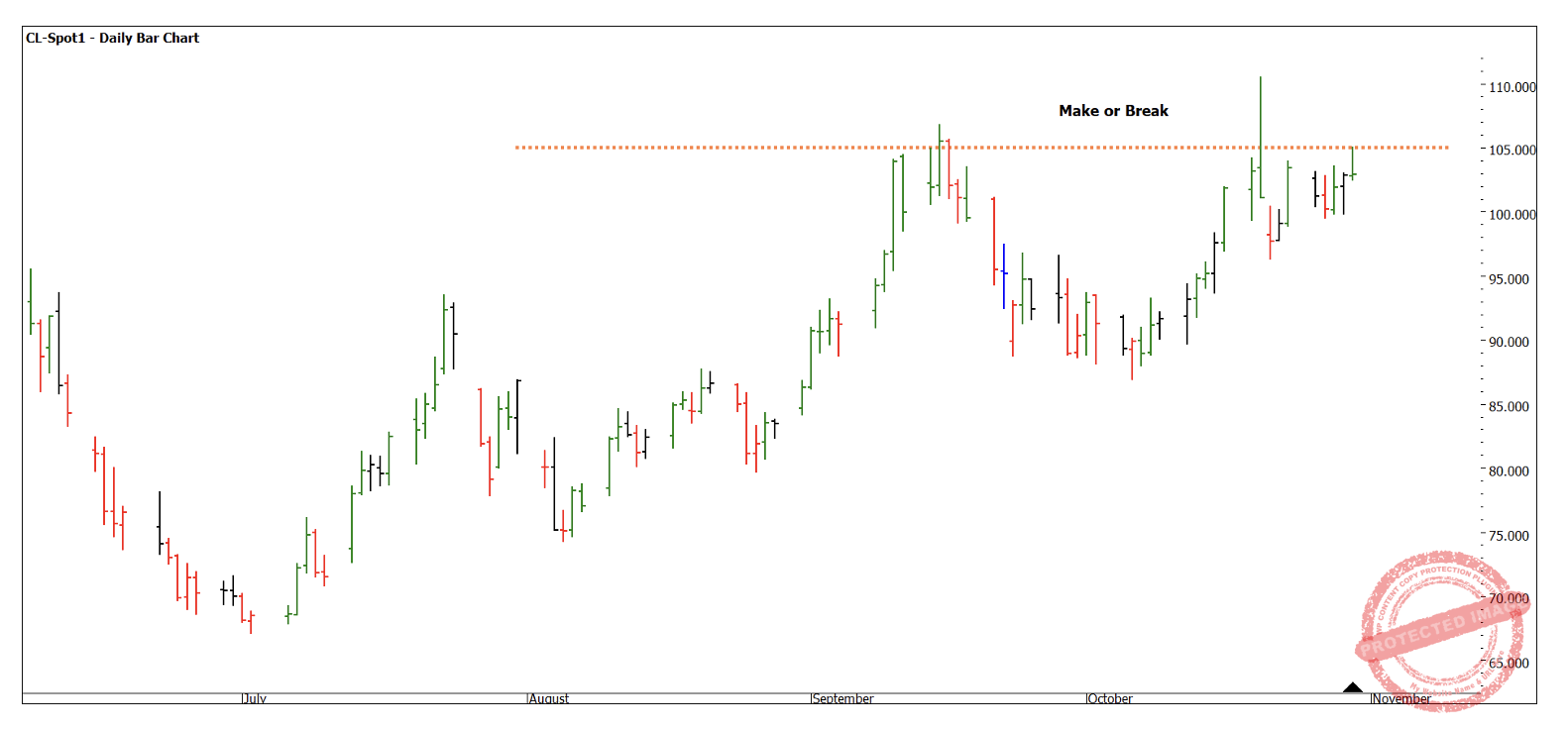
Chart 1 – Daily Bar Chart CL-Spot1
The chart above provides a practical example of this principle in action.
The next session was a down day and moved away enough to consider the direction you have chosen may be correct. In the instance when the market does move far or show signs and not follow through (this requires form reading skills) you can start to see how the market should usually respond, especially when you follow a market closely.
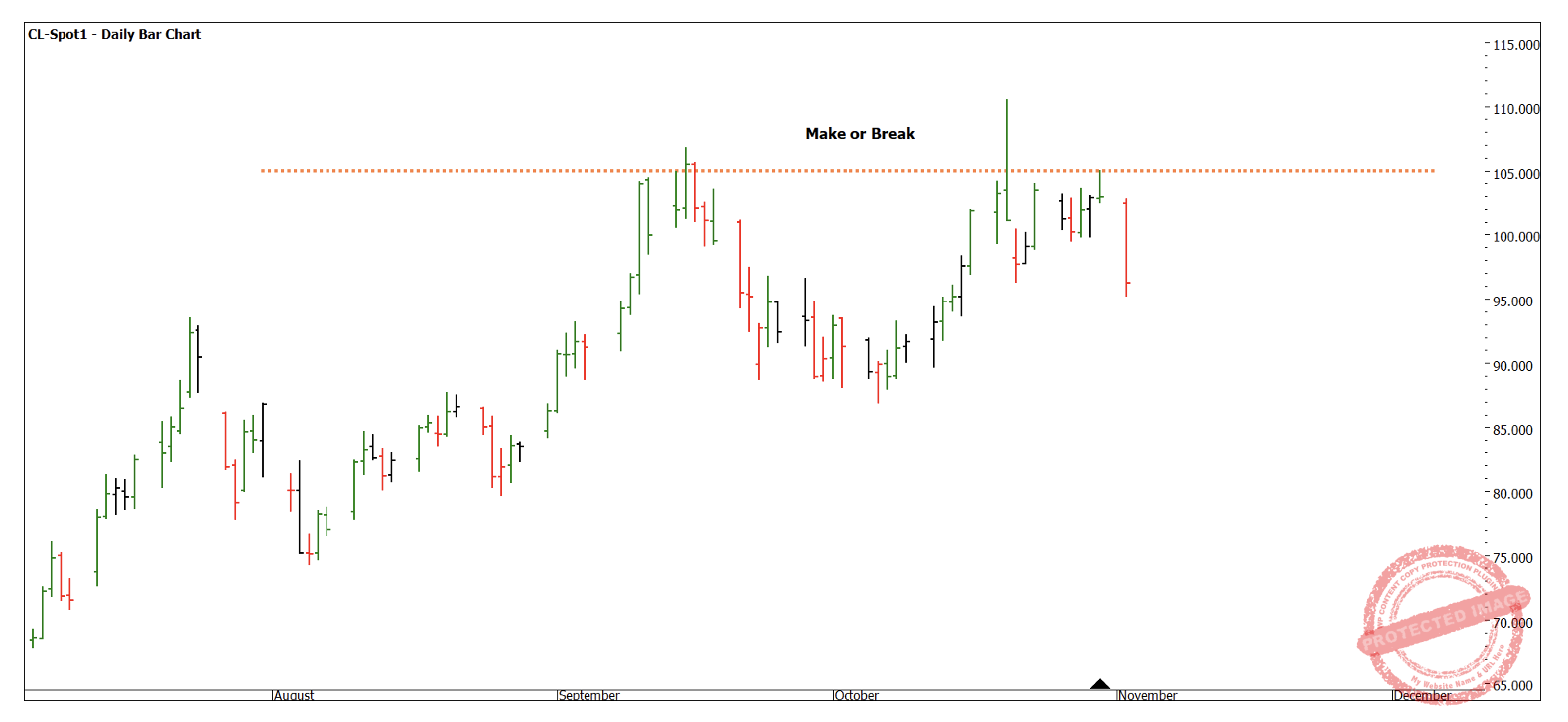
Chart 2 – Daily Bar Chart CL-Spot1
Chart 3 shows the progression of the setup as it moved lower.
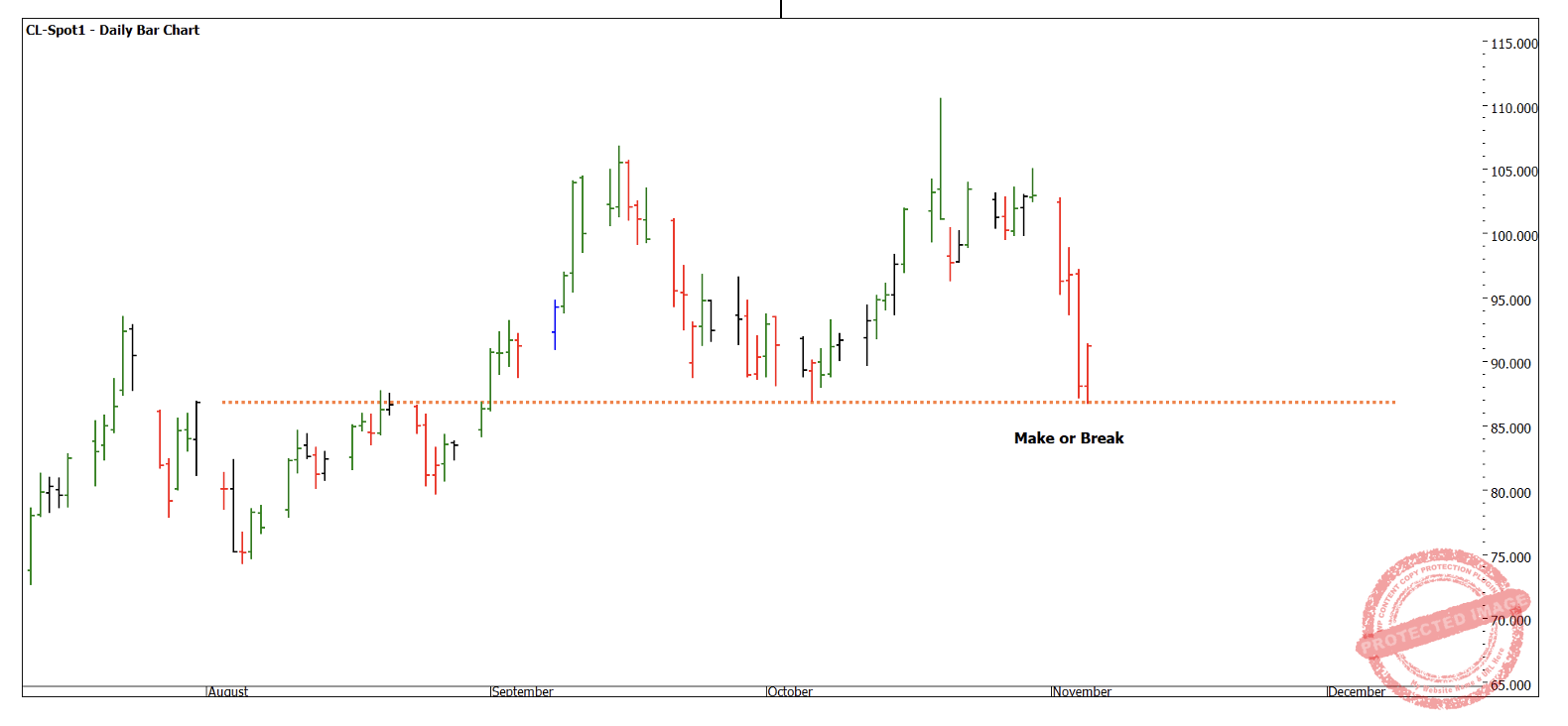
Chart 3 – Daily Bar Chart CL-Spot1
At this point in time the movement south has been validated, the idea of a stop and reverse at the previous point would be removed from the trade management tools for this particular setup.
Interestingly, if you had just seen this market for the first time today, you could see a possible double bottom pattern on or around 50% of the move. You can imagine some traders may be looking to go long if the double bottom confirms, you could then introduce a stop and reverse into the management of a long position and reverse your position if the market gets you in and then falls away.
From a trading perspective, remaining short below the make-or-break line was logical. As long as price stayed beneath resistance, the assumption was that the market would continue lower, or at the very least remain unable to establish a meaningful breakout. The resistance level acted as a reference point defining the bearish thesis.
However, successful traders understand that every trade idea must contain a condition that proves it wrong.
In this example, that condition was straightforward: if Crude Oil could reclaim and hold above the make-or-break level, it would signal that sellers were losing control and buyers were gaining strength. A move back above resistance would invalidate the short position. Many traders would simply cover their shorts and move to the sidelines. A stop and reverse trader views the situation differently.
The logic is simple. If the reason for being short no longer exists, and the market is demonstrating strength by breaking a major resistance level, then the probabilities may have shifted in favour of a long position. Rather than merely stopping out, the trader exits the short and simultaneously establishes a long trade.
This approach offers several advantages.
First, it removes emotional attachment from the decision-making process. The trader is not arguing with the market or hoping for a reversal. The market itself dictates the next action.
Second, it allows traders to participate in powerful directional moves that often emerge after important levels are breached. Significant support and resistance zones frequently act like pressure points. When price breaks through them, traders on the wrong side are forced to exit, while breakout traders enter. This combination can create strong momentum.
Third, stop and reverse trading enforces discipline. The trader enters the trade already knowing where the idea fails and what action will be taken if that happens.
In Chart 3, the orange make-or-break line was the dividing point between bearish and bullish expectations. Below the line, the market justified a short bias. Above the line, the evidence shifted towards strength.
Ultimately, stop and reverse is not about changing your mind. It is about changing your position when the evidence changes. The best traders understand that flexibility is often more valuable than conviction. When a key level is broken, the market is delivering new information. A stop and reverse strategy ensures that information is embraced rather than ignored.
My only caveat is that it works best with experience and good judgement rather than an all the time application. I use this strategy if I have a strong time and price cluster. If it enables you to simply reduce drawdown of capital a few times a year, it’s a very worthwhile strategy.
Good Trading
Aaron Lynch